
Illustrative image
The Math Is Clear
Medical preparedness doesn't just save lives. It costs a fraction of the alternatives — and protects every classroom simultaneously.
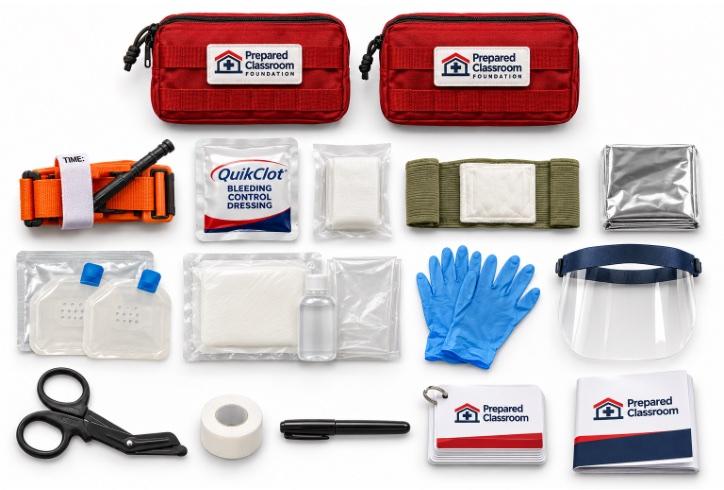
Everything in one classroom kitIllustrative image
What the Numbers Mean
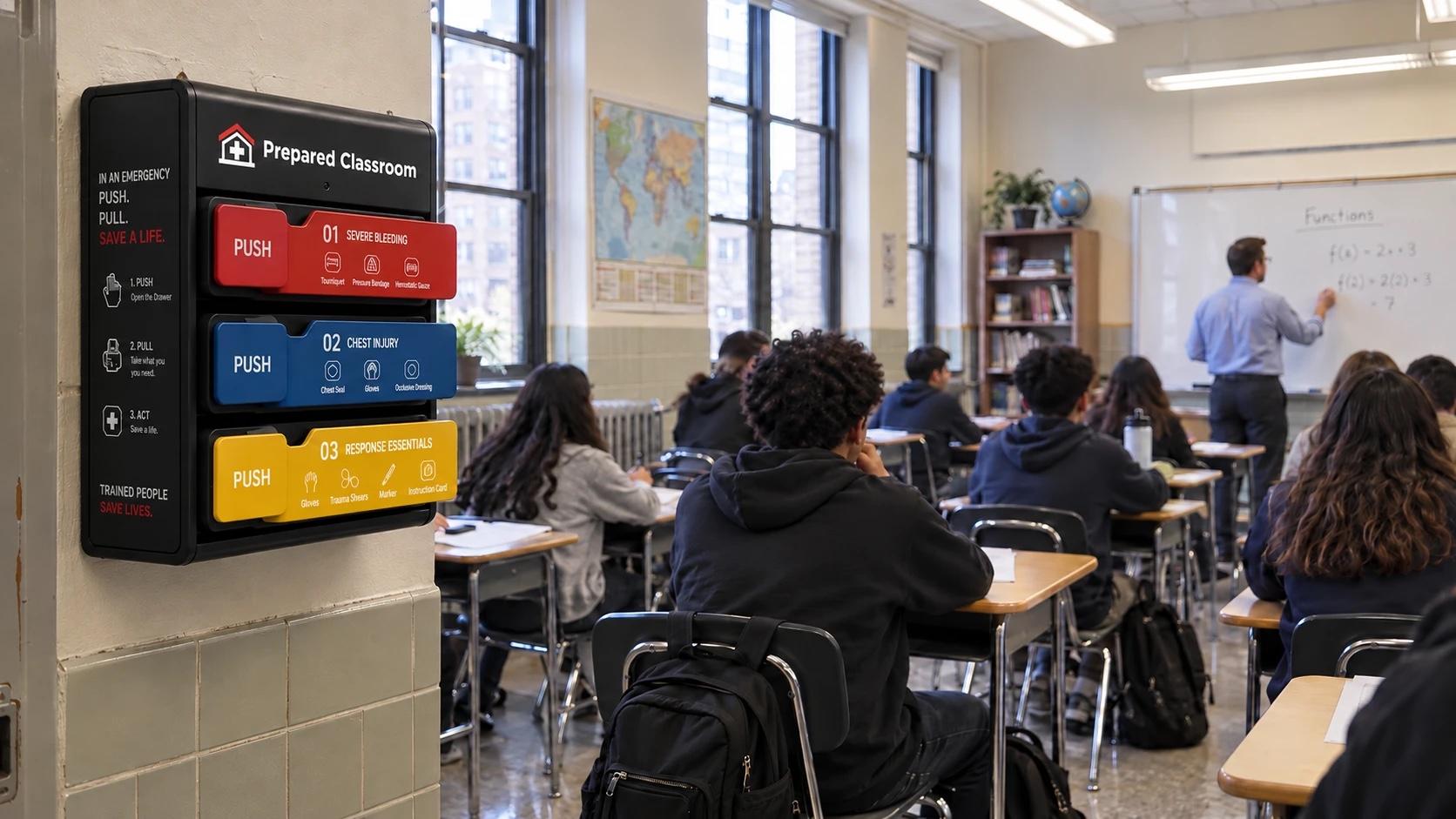
Every classroom should have the tools, training, and technology necessary to respond effectively when a medical emergency occurs. CARE Kits make that possible by placing life-saving medical equipment directly where emergencies happen — in the classroom.
With CARE Kits, schools can equip multiple buildings with strategically placed emergency medical supplies, train educators in evidence-based emergency response protocols, and deploy an integrated IoT alert and digital mapping system that helps coordinate a faster, more effective response.
Unlike traditional emergency response resources that must reach the scene, CARE Kits put critical medical equipment within immediate reach of educators and staff. This can make a meaningful difference during the critical minutes before EMS arrives.
CARE Kits provide more than equipment. They establish a comprehensive, school-wide medical preparedness system that combines accessible supplies, trained personnel, real-time alerts, and coordinated response capabilities.
Medical Preparedness Is Essential to School Safety
School safety requires more than preventing threats. It also requires preparing to respond when someone is injured.
Locked entrances, security personnel, cameras, and threat assessment teams all have important roles in protecting students and educators. Equally important is ensuring that schools are equipped to respond when a life-threatening injury or medical emergency occurs.
Prepared Classroom addresses this critical gap by bringing evidence-based emergency medical preparedness into every classroom.
The question is not simply whether a school is prepared to prevent an emergency. It is whether that school is prepared to save a life when one happens. Every classroom should have the equipment, training, and technology to make those critical first minutes count.
This Is Not Either/Or
We are not arguing against school security. Security personnel, locked entrances, cameras, and threat assessment teams all play important roles. Prepared Classroom is not a replacement for any of them.
What we are saying is this: security measures focus on prevention and deterrence. Medical preparedness focuses on survivability. You need both. Right now, almost every school in America has invested in one and ignored the other.
The question is not “Should we have guards or kits?” The question is: “If someone is injured, is there equipment in the room to keep them alive?”
Funding Sources
Medical preparedness programs are eligible for a range of funding mechanisms:
Federal Grants
Department of Homeland Security (DHS) and Department of Education grants for school safety and emergency preparedness.
State School Safety Funds
Many states have dedicated school safety appropriations that can be used for medical preparedness equipment and training.
PTA / PTO Fundraising
Parent organizations frequently fund safety improvements. CARE Kits are a tangible, understandable investment.
Corporate & Foundation Grants
Organizations focused on child safety, trauma medicine, and education are natural funding partners.
Insurance Premium Reduction
Some school insurance carriers offer premium reductions for institutions that implement medical preparedness programs.
Continue Reading
Our Solution
The full three-part program: CARE Kits, educator training, and smart EMS integration.
Read moreFor Donors
See the impact of every dollar — from training one educator to equipping an entire school.
Read moreImplementation Guide
A 6-step process from consultation to full deployment in your district.
Read more