
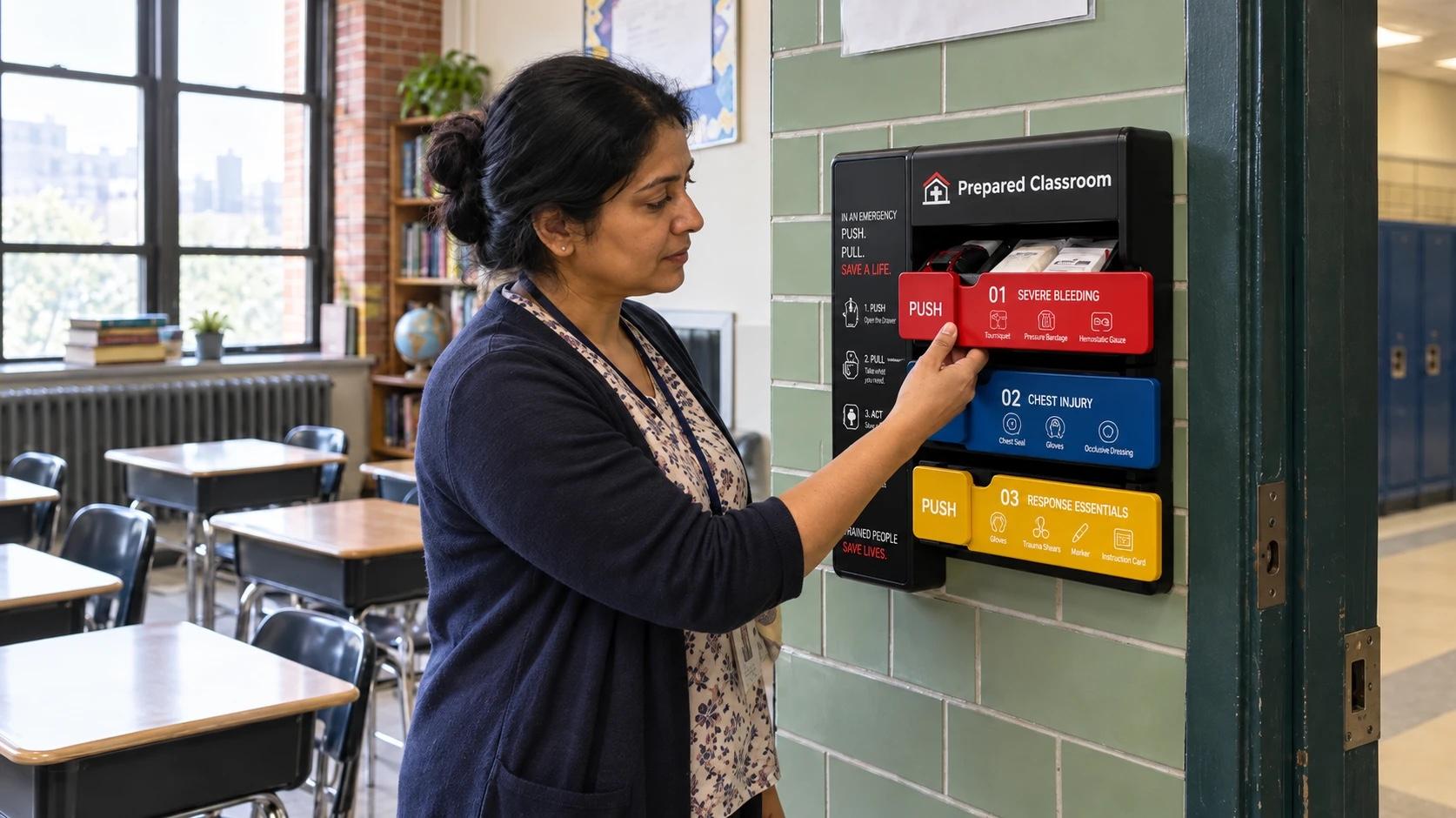
Illustrative image
The CARE Kit
Classroom Accessible Response Equipment. Everything an educator needs to stop preventable death, in one compact, wall-mounted kit. No medical background required.
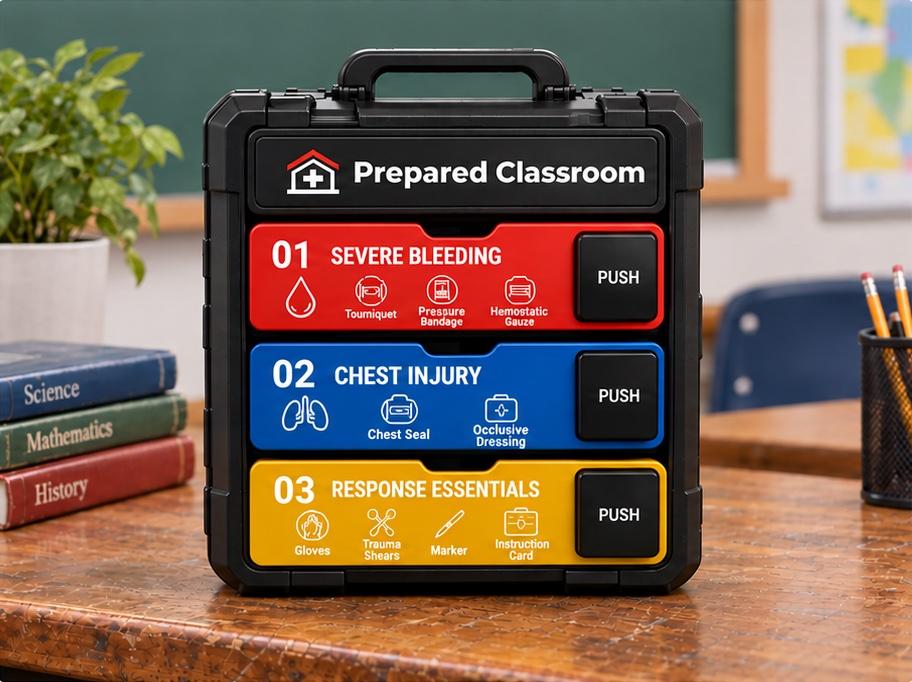
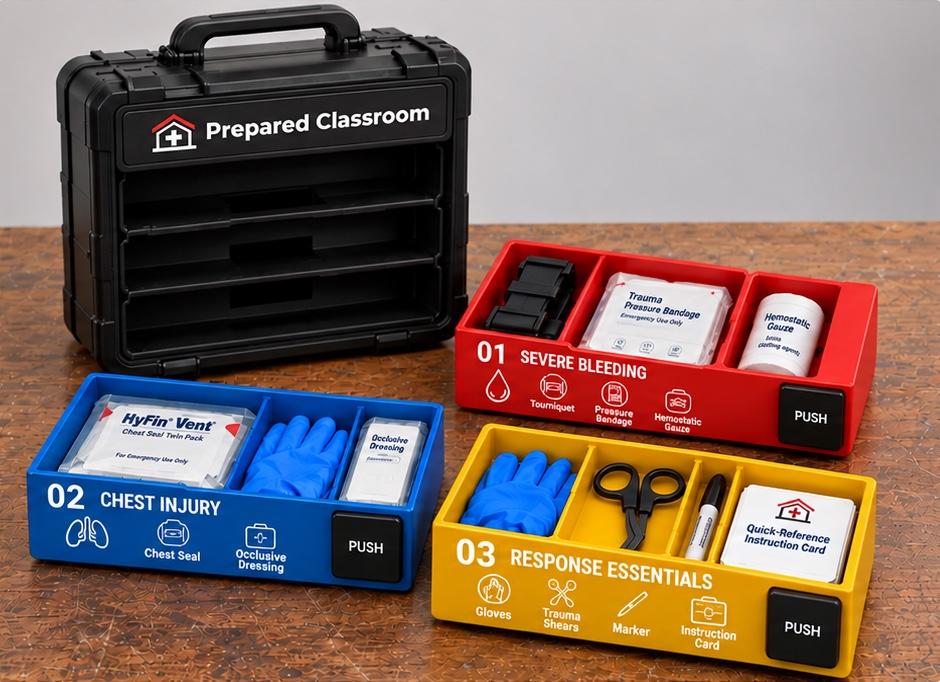
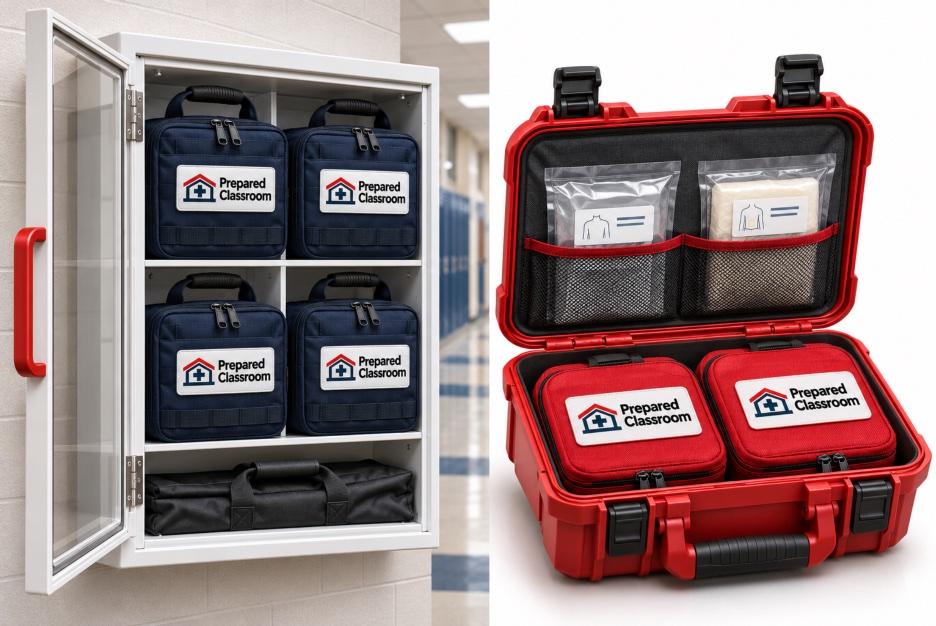
The CARE Kit, closed and openIllustrative image
What's Inside
Every CARE Kit contains the essential tools for controlling severe bleeding and caring for chest wounds until EMS arrives. The kit uses commercially available, FDA-cleared devices commonly used in military and civilian trauma care. The difference is, we put them where they're needed most — in the classroom.
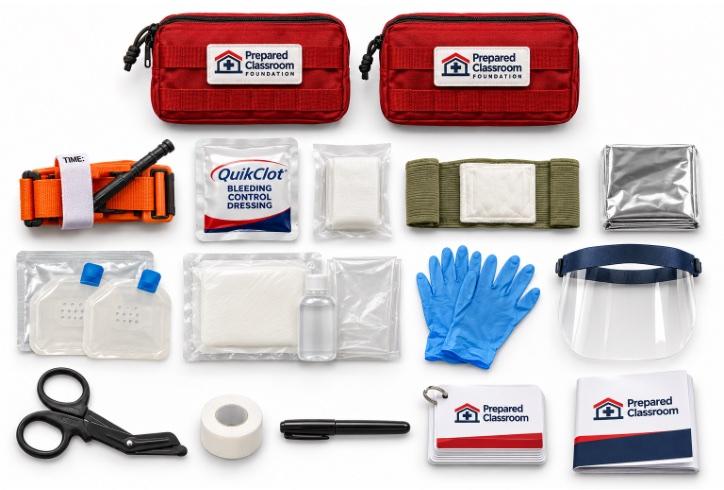
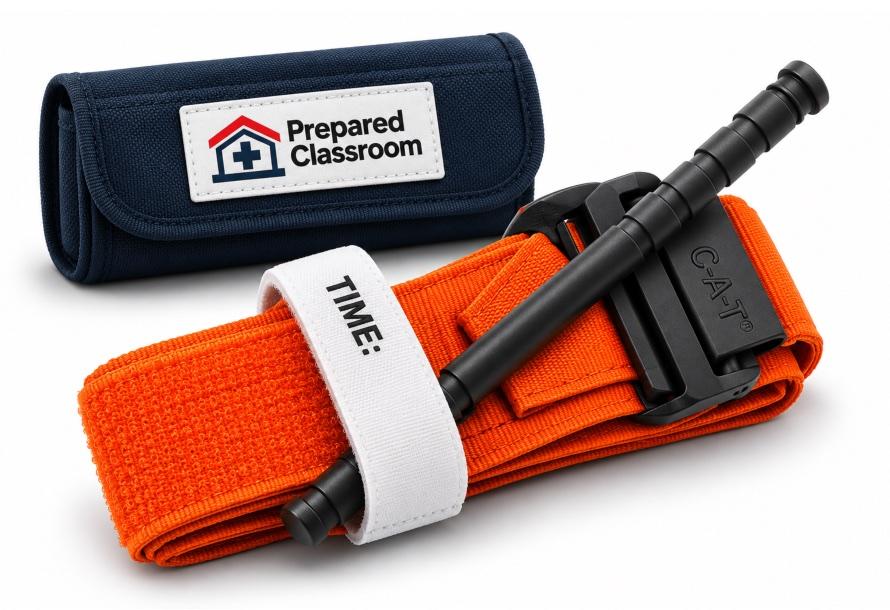
C-A-T tourniquets
Severe arm or leg bleeding
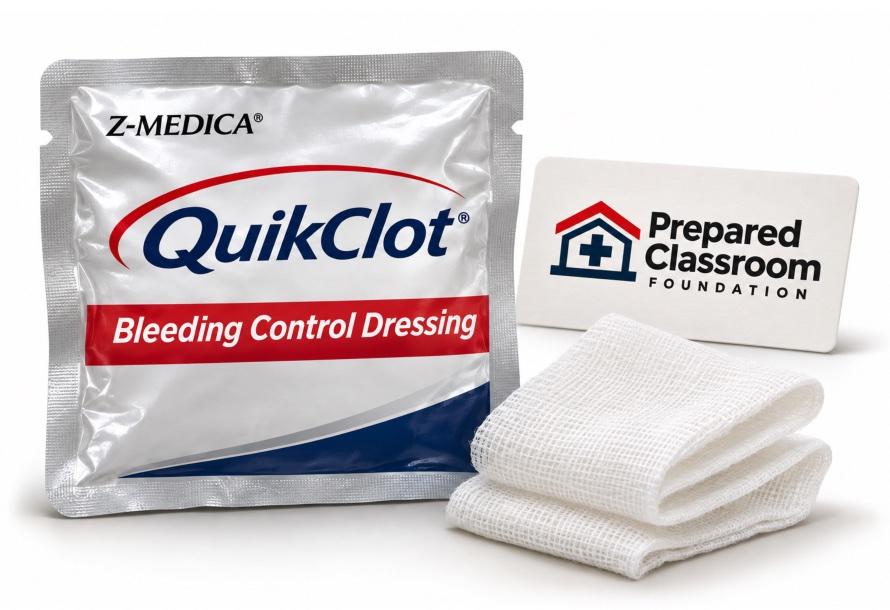
QuikClot bleeding control dressings
External bleeding control
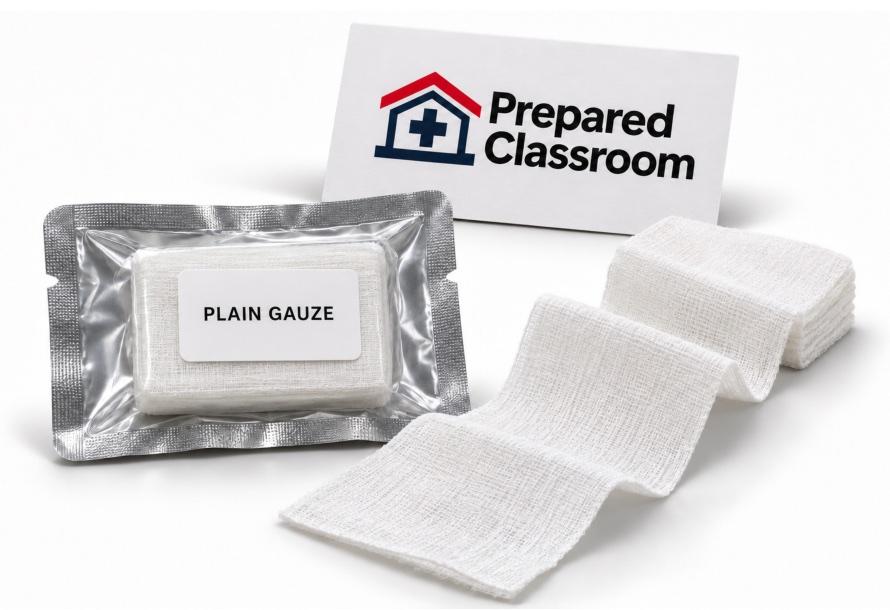
Plain compressed gauze
Wound packing and pressure
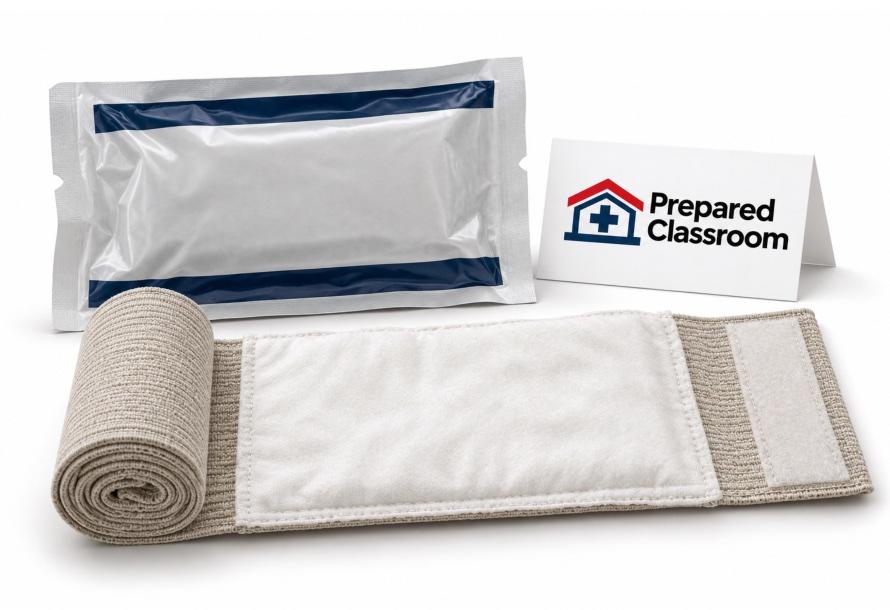
Pressure dressings
Hold dressings firmly in place
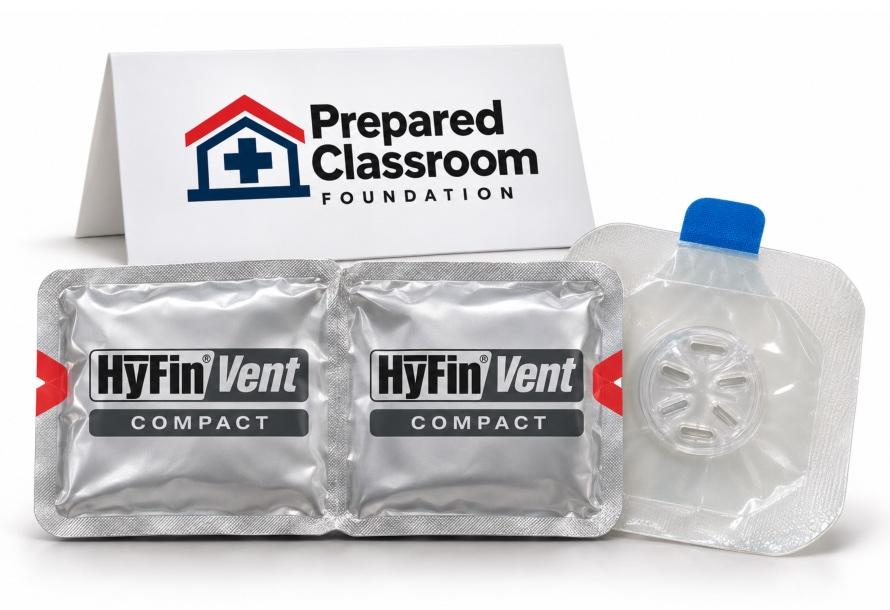
Vented chest seals
Chest-wound care
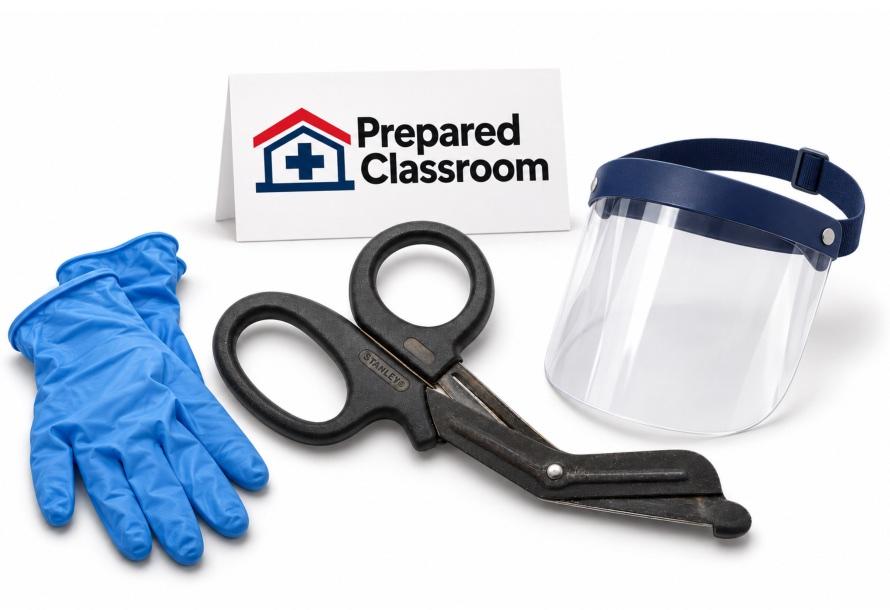
Gloves, trauma shears and face shields
Protect the responder and expose the injury
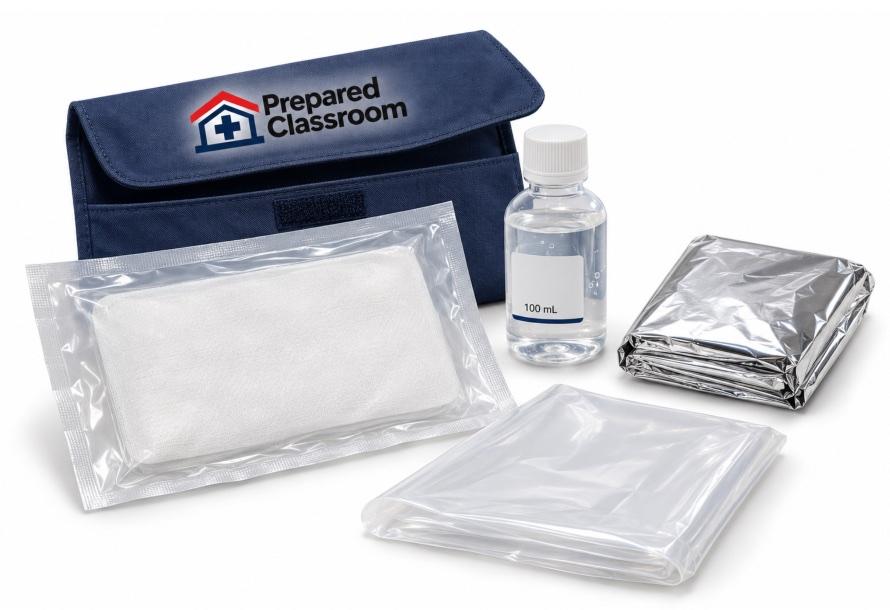
Abdominal cover and thermal blankets
Protect exposed tissue and reduce heat loss
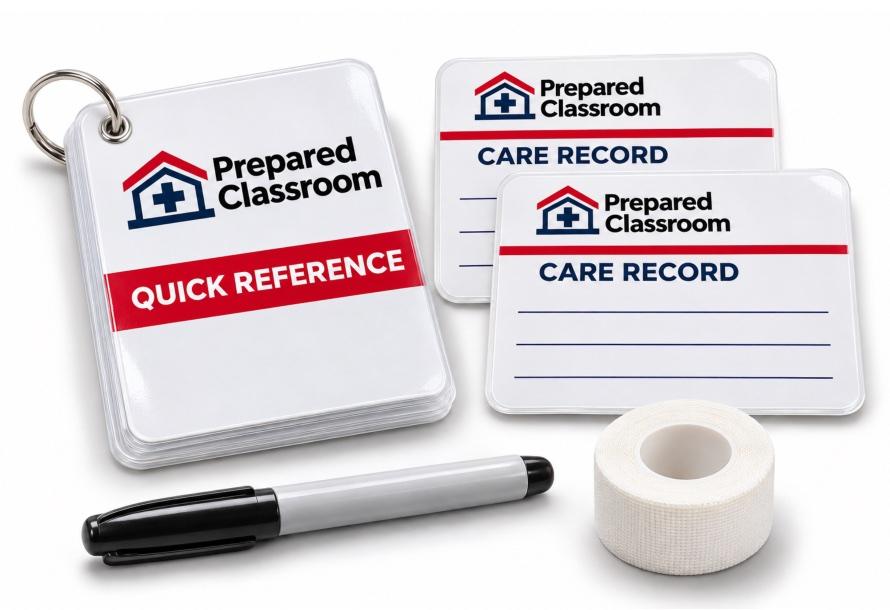
Instructions, care cards, marker and tape
Guide the response and hand off to EMS
Illustrative images · representative units shown
The essentials, in detail
1. Combat Application Tourniquet (C-A-T)
The gold standard in extremity hemorrhage control. A tourniquet is a strap-and-windlass device that compresses the blood vessels in a limb, stopping life-threatening bleeding in under 60 seconds. This single item addresses 60% of preventable trauma deaths. Application takes about 30 seconds with training.
2. Hemostatic Dressing (QuikClot Combat Gauze)
For wounds where a tourniquet can't be applied — the neck, torso, groin, or armpit — hemostatic gauze promotes rapid clotting when packed into the wound. Used by every branch of the U.S. military. FDA-cleared.
3. Chest Seal (HyFin Vent)
A vented chest seal is used for an open chest wound. It helps keep air from being sucked into the chest and can reduce the risk of a tension pneumothorax. It does not treat a tension pneumothorax once it has developed. Application is straightforward: peel the backing and press it over the wound.
Also Included
- Nitrile gloves (2 pairs)
- Trauma shears
- Pressure bandage
- Permanent marker
- Quick-reference instruction card
Design & Placement
Visible
Wall-mounted in a clearly marked case
Secure
Tamper-evident seal
Compact
About the size of a large first aid kit
Accessible
No lock, key, or code required
Placement: One per classroom, with additional kits in gyms, cafeterias, auditoriums, and main offices. Locations are mapped during the site assessment and registered in the digital twin building map.
Safety & Legal
- No controlled substances
- No medications, needles, or scalpels. Trauma shears are included to cut clothing.
- Good Samaritan laws in all 50 states protect good-faith emergency care; details vary by state
- Same access model as AEDs — no lock, no key, no code
Frequently Asked Questions
Continue Reading
Training Program
The 2-hour course that teaches educators to use every item in the CARE Kit confidently.
Read moreSmart Technology
IoT sensors that automatically notify 911 with exact location when a kit is opened.
Read moreCost Comparison
How CARE Kits compare to traditional school security measures in cost and effectiveness.
Read more